Every construction project begins with a vision, a detailed plan, and a signed contract. But if there's one certainty in building, it's that certainty itself is elusive. Site conditions reveal themselves only when excavation begins. Material availability shifts. Client needs evolve as framing takes shape and spaces become tangible rather than theoretical.
The difference between a construction experience that builds confidence and one that erodes trust isn't whether challenges arise—it's how your builder responds when they do.
The Reality Behind the Blueprint
Contracts provide essential structure, but they can't anticipate every variable in a months-long construction process. In Winchester's established neighborhoods, we regularly encounter site conditions that don't appear on surveys—underground springs, rock formations, or old utility lines that require navigation.
Weather patterns in our region add another layer of complexity. A wet spring can delay foundation work. Summer heat affects concrete curing times. These aren't excuses; they're realities that experienced builders factor into planning and communication.
The most successful projects aren't those without challenges—they're the ones where challenges are identified early, communicated clearly, and resolved collaboratively.
When Clients Want Changes: The Change Order Process
It's remarkably common. A client walks through their framed home and suddenly realizes the master closet could be configured more efficiently, or that an additional window would transform the morning light in the kitchen.
These insights aren't failures of planning—they're natural outcomes of seeing three-dimensional space for the first time. Smart builders establish a clear change order process before construction begins.
Our Approach to Mid-Project Changes
When a client requests a modification, we follow a structured evaluation:
- Feasibility assessment: Can the change be executed without compromising structural integrity or code compliance?
- Impact analysis: How does this affect the schedule, other trades, and project sequencing?
- Cost transparency: What are the actual costs, including materials, labor, and any ripple effects?
- Documentation: Every change is documented with updated drawings, written approvals, and revised timelines
We present this information clearly, giving clients the data they need to make informed decisions. Some changes prove more expensive or disruptive than anticipated—and clients appreciate knowing that before proceeding rather than after.
The Unexpected: Managing Unforeseen Challenges
Unforeseen challenges differ from client-requested changes. These are the discoveries that emerge during construction—the things no one could have anticipated during planning.
In our Winchester projects, we've encountered everything from undocumented additions on older homes to soil conditions that require engineering solutions. The key is response time and communication.
Our Protocol for Unexpected Issues
When crews identify an unforeseen challenge, we implement immediate assessment:
- Stop and evaluate: Work pauses in the affected area while we assess the full scope
- Bring in expertise: Structural engineers, geotechnical specialists, or code officials as needed
- Develop solutions: We present options, not just problems—multiple approaches when possible
- Client communication: Detailed explanation of what was found, why it matters, and how we propose to address it
- Documentation: Photos, reports, and written records that protect both parties
This methodical approach prevents small issues from becoming major problems. It also ensures clients understand not just what's happening, but why specific solutions are recommended.
Communication: The Foundation of Trust
The most sophisticated change management systems fail without consistent, honest communication. Construction anxiety typically stems not from the challenges themselves, but from feeling uninformed or uncertain about what's happening.
We've learned that over-communication is rarely a complaint. Clients want to know the status of their investment, understand decisions being made, and feel confident that someone is managing the details they don't see.
Our Communication Framework
Every project includes structured touchpoints:
- Weekly updates: Progress reports, upcoming milestones, and any developing items requiring attention
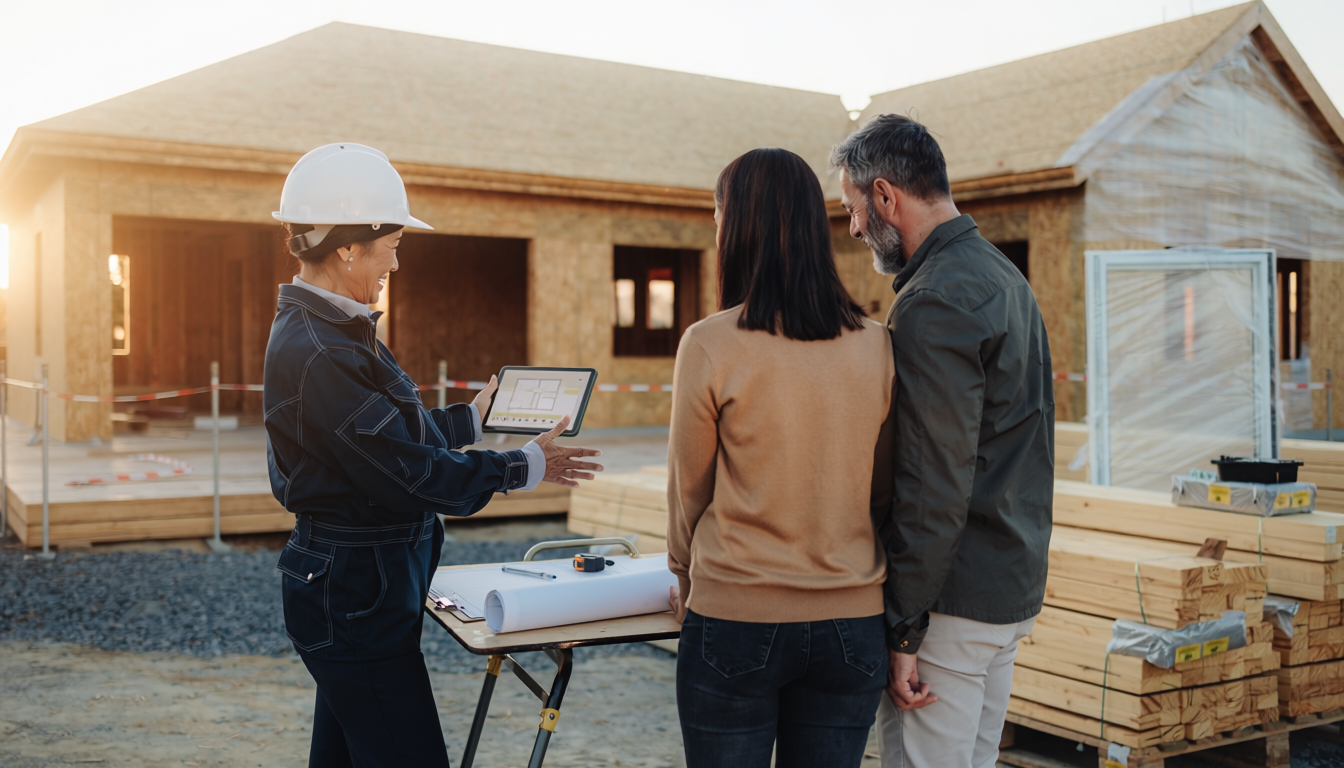
- Scheduled site meetings: Regular walk-throughs at key phases where clients can see progress and ask questions
- Immediate notification: Same-day contact when unexpected issues arise or decisions are needed
- Accessible project management: A single point of contact who knows your project intimately and responds promptly
This isn't about generating paperwork—it's about ensuring clients never wonder where their project stands or feel surprised by developments.
Managing Client Concerns: When Worry Sets In
Even with excellent communication, clients sometimes feel concerned. Construction is a significant investment, and worry is a natural response to such an important undertaking.
Common mid-construction concerns include timeline anxiety, budget questions, quality worries, or simply the stress of coordinating a major life change while maintaining daily routines.
How We Address Construction Anxiety
When clients express concerns, we respond with concrete actions rather than reassurances alone:
For timeline concerns: We provide updated schedules with specific milestone dates, explain any delays with context, and outline what we're doing to maintain momentum.
For budget questions: We review the original contract, detail any approved changes, and confirm the current financial status in writing. No surprises at closing.
For quality worries: We invite clients to site, walk through our quality control processes, and explain our inspection procedures. Seeing the multiple verification points typically provides confidence.
For coordination stress: We minimize client burden by managing trade scheduling, handling inspections, and coordinating the countless details that don't require client input.
The Role of Contingency: Planning for the Unplanned
Experienced builders and clients build contingency into projects—both financial and temporal. This isn't pessimism; it's practical planning that reduces stress when the unexpected occurs.
We recommend clients maintain a contingency reserve of 10-15% of the contract value for unforeseen conditions or desired changes. Similarly, building schedule buffer protects against weather delays, material availability issues, or permit processing variations.
Projects with appropriate contingency planning consistently produce less stressed clients and better outcomes. When challenges arise, there's flexibility to address them properly rather than cutting corners due to artificial constraints.
Documentation: Protecting All Parties
Thorough documentation serves everyone's interests. It provides clarity when memories differ, establishes accountability, and creates a record that protects both builder and client.
Every change order, unforeseen condition, material substitution, or schedule adjustment is documented with written descriptions, relevant photos, and signed acknowledgments. This isn't bureaucracy—it's professional practice that prevents disputes and ensures alignment.
At project completion, clients receive comprehensive documentation including as-built drawings, warranty information, and a complete record of all modifications made during construction.
Learning Systems: Getting Better with Every Project
The best construction companies view every challenge as data. What patterns emerge? Which issues could have been anticipated? How can processes improve?
We maintain detailed project records not just for individual accountability, but to refine our approach. When we encounter a specific soil condition in one Winchester neighborhood, that knowledge informs our approach to similar properties. When a particular change request proves common, we address it during initial design phases on future projects.
This commitment to continuous improvement means clients benefit from the collective experience of every project we've completed.
The Partnership Model: Builder and Client as Collaborators
The traditional builder-client relationship positions the parties as adversaries—one trying to maximize profit, the other to minimize cost. This dynamic produces tension, suspicion, and suboptimal outcomes.
We operate from a different premise: builder and client share the goal of creating exceptional results. Challenges are solved collaboratively. Decisions are made with full information. Success is defined by long-term value, not short-term convenience.
This partnership model requires transparency from the builder and trust from the client. When both are present, mid-construction challenges become problem-solving opportunities rather than relationship stressors.
What to Expect: A Realistic Timeline Perspective
In Winchester's current construction environment, custom home projects typically span 10-14 months from groundbreaking to completion. Commercial projects vary widely based on scope and complexity.
Within that timeline, clients should anticipate several decision points, at least one unforeseen condition requiring adjustment, and multiple inspections at various stages. This is normal, not exceptional.
Weather in our region means winter months may see slower progress on exterior work, while summer provides optimal conditions for most construction activities. Permit processing times fluctuate based on municipal workload and project complexity.
Setting realistic expectations from the start—acknowledging that the timeline is a best estimate subject to variables—produces better experiences than presenting overly optimistic schedules that breed disappointment.
Moving Forward: Building with Confidence
Construction will always involve challenges, changes, and moments of concern. The question isn't whether these arise, but how they're managed.
Builders who demonstrate expertise, communicate proactively, document thoroughly, and approach problems as solvable rather than catastrophic create experiences where clients feel informed, respected, and confident.
Your investment deserves a builder who views mid-construction challenges not as threats to be minimized, but as opportunities to demonstrate capability, integrity, and commitment to exceptional outcomes.
Ready to work with a builder who manages the inevitable with transparency and expertise? Contact us to discuss your project and learn how our approach to communication, problem-solving, and client partnership creates construction experiences that build confidence, not anxiety. Because the quality of the journey matters as much as the destination.